As an Amazon Associate, we earn from qualifying purchases. Some links on this site are affiliate links at no extra cost to you. Our recommendations are based on thorough research and editorial judgment.


Tips For Paddling With Children Safely

When taking kids kayaking, safety comes first! We’ll want U.S. Coast Guard-approved life jackets properly sized for each child’s weight, along with essential rescue gear and a fully-stocked first aid kit. Choose stable, wider kayaks (34-38 inches) with sit-on-top designs, and stick to calm, shallow waters with winds under 12 mph. Keep communication clear with hand signals, and always pack sun protection and quick-drying clothes. These fundamentals set the stage for countless family paddling adventures ahead.
Key Takeaways
- Ensure every child wears a properly-fitted, Coast Guard-approved life jacket with secure straps and neck support for their weight class.
- Choose stable, wide kayaks with sit-on-top designs and high weight capacity to accommodate children safely and comfortably.
- Stay in calm, shallow waters and check weather forecasts, avoiding conditions with winds over 12 mph or approaching storms.
- Establish clear communication signals before launching and teach children basic paddle commands and hand gestures for safety.
- Pack essential safety gear including whistles, first aid kits, and rescue equipment while maintaining constant supervision of children.
Essential Safety Equipment for Young Paddlers
Five essential pieces of safety equipment stand between a fun family paddling adventure and potential disaster! Let’s make sure we’ve got everything covered.
Proper PFD selection is absolutely critical – we must have U.S. Coast Guard-approved life jackets sized correctly for each child’s weight category. Remember: 8-30 lbs for infants, 30-50 lbs for children, and 50-90 lbs for youth.
We’ll also need rescue gear for every adult paddler:
- Paddle float
- Throw bag
- Tow line
- Extra paddle
- Whistle for signaling
Don’t forget those crucial safety features for infant PFDs – secure crotch straps and neck pads are non-negotiable! And here’s a pro tip: test the fit by lifting the PFD at the shoulders. If it rides up past their ears, it’s too loose and needs adjusting. Additionally, proper fit ensures that the life jacket stays securely in place and provides the necessary buoyancy for safety on the water.
Choosing the Right Kayak for Family Adventures

When it’s time to choose a family kayak, we’ve got to focus on both safety and fun! The right kayak size makes all the difference – look for models between 12-16 feet long that can comfortably fit your crew.
Stability features are essential when paddling with kids who might wiggle around. We recommend wider kayaks (34-38 inches) with flat or moderately V-shaped hulls that resist tipping. After all, who wants an unexpected swim?
Look for these family-friendly essentials:
- Sit-on-top designs for easy access
- Weight capacity of 300-600+ pounds
- Adjustable seating positions
- Lightweight construction (under 40 pounds)
- Self-draining cockpits
Additionally, selecting kayaks with higher weight capacities means better stability for your whole family on the water.
Weather and Water Conditions Assessment

Weather verification is absolutely essential before hitting the water with kids. We always check local forecasts for the entire paddling duration and avoid heading out if winds exceed 12-15 mph or storms threaten. Remember: Mother Nature can be unpredictable!
Current assessment comes next. We carefully evaluate water conditions, especially in coastal areas where tides can dramatically affect paddling difficulty. For kids, we stick to calm, shallow waters away from strong currents and choppy waves. To keep our gear safe and dry, investing in a quality dry bag is a smart move to ensure essentials remain protected from splashes and rain.
Stay close to shore and keep monitoring conditions throughout your adventure. If dark clouds roll in or winds pick up unexpectedly, don’t hesitate – head straight for the nearest safe landing spot. When it comes to paddling with little ones, it’s better to cut a trip short than risk their safety.
Building Basic Skills Through Practice
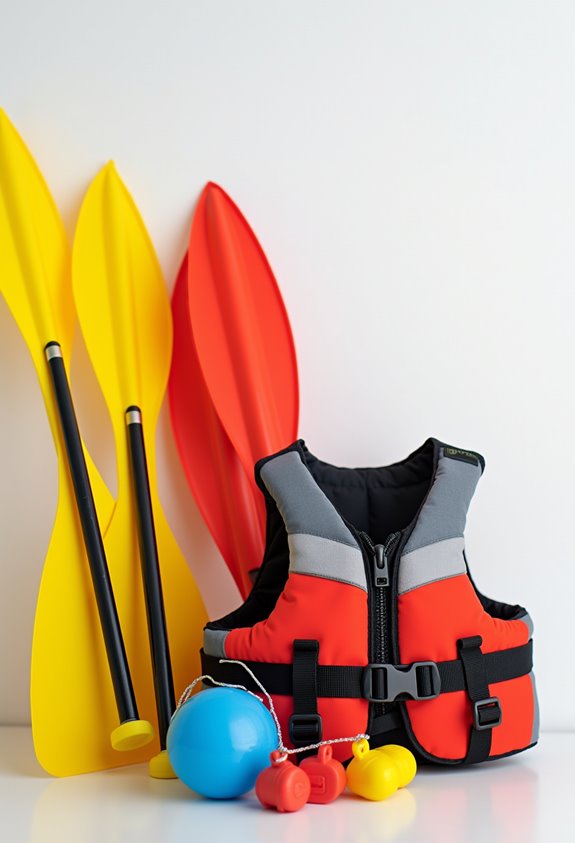
Building confident paddlers starts with mastering fundamental skills in a controlled environment! We’ll begin with land drills to establish proper technique before hitting the water.
Let’s start in calm, protected areas where young paddlers can focus on skill mastery without fighting currents or boat traffic. Have them practice basic strokes and positioning on solid ground first – it’s much easier to correct form when you’re not wobbling!
We’ll guarantee proper fitting PFDs and right-sized equipment for each child. Starting with tandem boats allows beginners to learn from experienced paddlers, such as those using two-person fishing kayaks which provide stability and support.
Keep practice sessions short and structured. Remember to:
- Demonstrate each technique clearly
- Practice basic strokes repeatedly
- Monitor comfort levels
- Gradually increase challenge levels
Watch their confidence soar as they progress from protected waters to handling mild conditions!
Communication Methods on the Water
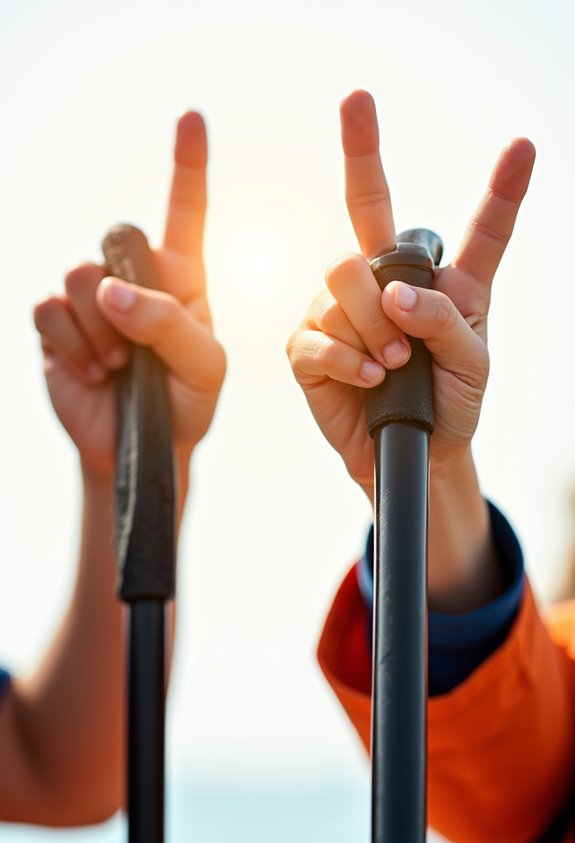
Clear communication can make or break a day on the water! When we’re paddling with kids, we need multiple ways to get our messages across effectively.
Let’s start with paddle signals and hand gestures – they’re vital when wind and waves make shouting impossible. We’ll want to practice these visual cues before launching, making sure everyone understands basics like “stop,” “danger ahead,” and “need help.”
While VHF radios are important for emergencies, we can’t rely solely on electronic devices. That’s why we teach our young paddlers multiple communication techniques, from positional language to non-verbal signals.
Here’s a pro tip: carry a waterproof signal card! It’s amazing how quickly kids catch on when they have visual references to study during breaks. Additionally, impact-absorbing linings in helmets can provide extra safety during unexpected incidents, ensuring that every child feels secure while enjoying their time on the water.
Emergency Response and Rescue Procedures
When paddling with kids, having solid emergency procedures isn’t just important – it’s absolutely essential!
Let’s break down our key rescue techniques:
- Remove children from water immediately and get them to shore
- Signal all staff using predetermined whistles or calls
- Designate a shore coordinator to direct rescue efforts
- Contact emergency services if anyone’s missing or injured
Proper emergency planning means having the right gear on hand:
- Fitted PFDs for every child
- Throw bags and spare paddles
- First aid supplies
- Waterproof communication devices
We always train our young paddlers in self-rescue too! They need to know how to:
- Perform wet exits calmly
- Use paddle floats for re-entry
- Signal for help when needed
- Stay with their kayak if capsized
Remember: Practice these skills regularly in controlled conditions. It’ll make all the difference when seconds count! Additionally, ensuring each child has a fitted U.S. Coast Guard-approved life jacket is paramount for their safety on the water.
Setting Clear Rules and Boundaries
Now that we’ve covered emergency response, let’s focus on establishing rock-solid rules – because successful paddling adventures with kids depend on crystal-clear boundaries!
The key is consistent role modeling and repetition. Before launching, we’ll review safety guidelines multiple times using simple language and behavior examples kids can grasp. Let’s demonstrate proper techniques on land first!
Set specific physical limits:
- No standing in kayaks
- Stay within sight
- Signal before changing direction
- Maintain assigned positions
Enforce rules calmly but firmly, with zero exceptions. When children follow the guidelines, praise them! When they don’t, implement clear consequences.
Remember to match expectations to age and skill level. Younger paddlers ride with adults, while older kids can graduate to tandem kayaking as they gain experience. Additionally, ensure that kids understand the importance of comfort and support features in their seating, as this can enhance their overall experience on the water.
Proper Clothing and Sun Protection
Safety and comfort start with proper clothing choices for your young paddlers! Let’s make sure they stay protected and comfortable on the water with the right gear choices.
We’ll want to skip the cotton and opt for moisture-wicking fabrics like nylon or polyester that dry quickly. Pack multiple lightweight layers they can adjust as temperatures change throughout the day.
Sun protection is absolutely critical! Make sure to apply waterproof sunscreen before launching and pack sun-protective clothing with UPF ratings. Wide-brimmed hats and UV-blocking sunglasses are must-haves too.
Don’t forget proper footwear – secure water shoes with good traction are essential. And always pack a complete change of dry clothes! Additionally, check for Coast Guard approval on all life vests to ensure safety compliance.
Pre-Launch Safety Checklist
Before launching your kayak adventure with kids, a thorough safety check isn’t just smart – it’s crucial!
Let’s start with the basics: inspect every kayak for damage and verify all safety gear is ready to go. We’re talking about properly-fitted PFDs, whistles, and fully-stocked first aid kits within easy reach.
Have you checked the weather forecast? Don’t forget to review wind conditions and water temperatures – these can make or break your trip!
Remember, effective child supervision starts before hitting the water. Make sure everyone’s used the restroom and has easy access to water and snacks. We don’t want any “emergency” situations mid-paddle!
Finally, share your float plan with someone reliable. Include your launch site, expected return time, and planned route. Safety first, adventure second – then watch those smiles light up on the water! Additionally, consider using a waterproof dry bag to keep your essentials safe from splashes and unexpected downpours.
Frequently Asked Questions
At What Age Can Children Start Kayaking Independently?
Like birds learning to fly, we’ll see children ready for independent kayaking around age 12, though age guidelines suggest supervised practice can start at 5. Let’s prioritize kayaking safety with proper equipment and conditions.
How Long Should Initial Kayaking Sessions Last With Young Children?
We’ll want to keep initial kayaking duration between 30 minutes to 1 hour, matching your child’s attention span. Start with even shorter 5-minute intervals for very young beginners, gradually increasing as they build confidence.
Should Siblings Share a Tandem Kayak Without Adult Supervision?
Imagine this: your children adrift and vulnerable. We can’t recommend siblings kayaking alone – sibling dynamics and inexperience create dangerous situations. Even with safety measures in place, adult supervision is essential for protecting our precious paddlers.
What Snacks Are Best for Keeping Children Energized During Kayaking Trips?
We’ll want to pack energy boosting snacks like trail mix, jerky, protein bars, and fresh apples. Don’t forget plenty of water for hydration – kids need regular fuel breaks during kayaking adventures.
How Can I Help My Child Overcome Fear of Kayaking?
Let’s start with gradual fear exposure in calm waters while offering positive reinforcement for small victories. We’ll validate their concerns, teach basic skills, and celebrate progress together. Practice relaxation techniques to build confidence.


