As an Amazon Associate, we earn from qualifying purchases. Some links on this site are affiliate links at no extra cost to you. Our recommendations are based on thorough research and editorial judgment.


How To Feather Your Paddle Blades Correctly?

To feather your paddle blades correctly, start by setting your dominant hand as the control hand and adjusting your feather angle between 40-60° for high-angle strokes or minimal feathering for low-angle cruising. Keep your wrist neutral while rotating the non-control hand freely during strokes. When facing headwinds, increase the angle to 60-90°, and in crosswinds, reduce to 30-45° or unfeathered. Regular practice builds muscle memory, and there’s so much more to discover about mastering this essential kayaking technique!
Key Takeaways
- Choose your control hand (typically dominant hand) and maintain consistent grip alignment with the blade’s top edge for proper control.
- Start with minimal feathering (0-30 degrees) and gradually increase to optimal angles between 40-60 degrees for high-angle strokes.
- Keep your wrist in a neutral position while allowing your non-control hand to rotate freely during strokes.
- Adjust feather angles based on wind conditions: higher angles for headwinds, lower angles for crosswinds, minimal feathering for tailwinds.
- Clean and maintain your ferrule system regularly to ensure smooth angle adjustments and optimal paddle performance.
Understanding the Basics of Paddle Feathering
When we feather our paddle blades, we’re offsetting them at an angle rather than keeping them flat. One blade stays vertical while the other tilts forward – it’s like giving your paddle a slight twist!
This technique is vital for both kayak and surfski paddle types, dramatically improving stroke efficiency by reducing air resistance. Think of it as slicing through the air instead of fighting against it.
The control hand is essential – it’s the one that maintains a firm grip while the other allows rotation. Most paddlers use right-hand control paddles, but left-hand options are available too. Using asymmetrical, feathered blades enhances your overall paddling experience and allows for better performance.
Ready to put this into practice? Your paddle’s efficiency will thank you!
The Science Behind Feather Angles
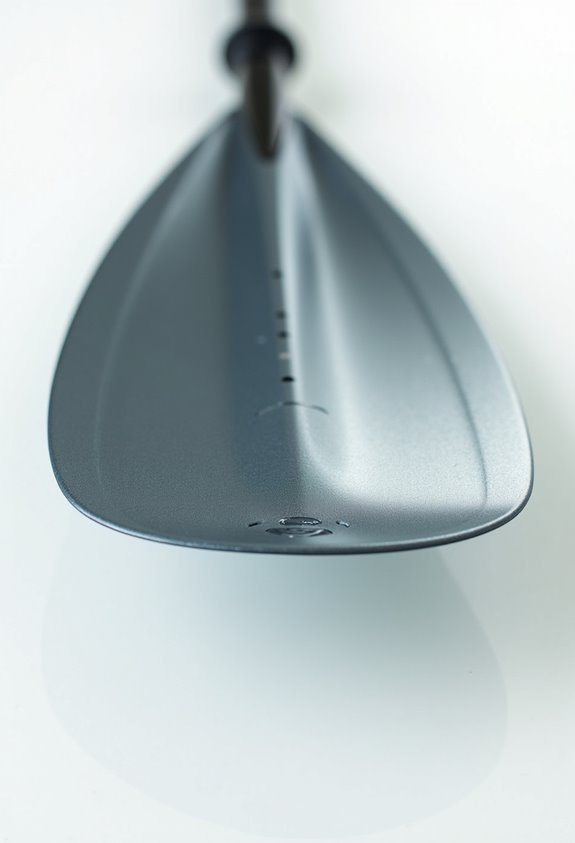
The science of feather angle effects is all about optimizing how our wrists and blades work together. When we angle our blades between 30° and 60°, we’re actually aligning them with our natural hand rotation during strokes.
Think of it like this – our wrists naturally want to rotate in a certain way. By feathering our paddle blades, we’re working with our body’s biomechanics, not against them!
For wrist alignment optimization, remember:
- High-angle strokes work best with 40-60° feathering
- Low-angle cruising prefers minimal feathering
- Wind conditions might require adjustments
Interestingly, much like pedal drive systems in fishing kayaks that enhance maneuverability, getting these angles right doesn’t just feel better – it helps prevent injury and maximizes our power transfer through each stroke. Pretty cool how science helps us paddle better, right?
Essential Equipment for Proper Feathering
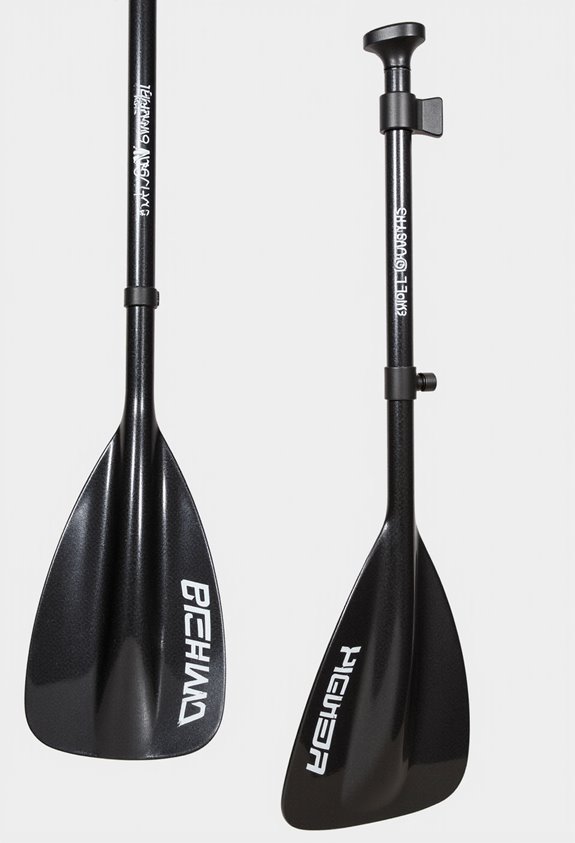
Getting the right equipment for proper feathering starts with understanding the key components!
When selecting paddle materials, we’ll want to take into account both function and comfort. The shaft should be around 8 feet long and 1-1/2″ x 1-1/2″ before shaping, while blades need 16″-18″ blanks that are at least 4″ wide and thick.
Let’s talk feathering tools! We’ve got several ferrule options to choose from:
- Snap-button systems (perfect for beginners!)
- Posi-Lok™ for unlimited angle adjustments
- Versa-Lok when you need length flexibility
Don’t forget waterproof adhesives – Tite-Bond III, Gorilla glue, or epoxy will keep everything secure. Remember, wider materials let us laminate multiple components simultaneously, saving time and ensuring consistency in our paddle construction. Additionally, having a lightweight carbon fiber shaft can significantly reduce paddling fatigue, enhancing your overall paddling experience.
Ready to start assembling? Let’s make sure we’ve got everything lined up!
Recommended Products
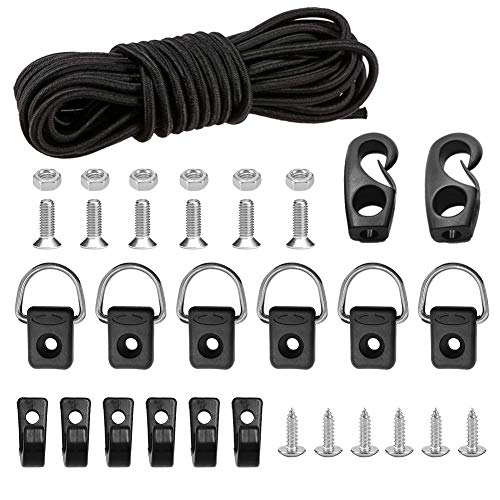
【Package Included】: Kayak deck rigging Kit Included A 8 feet 1/4 inch elastic bungee cord, 6 pcs D Ring with 6 PCs 304 M6 stainless steel screws, 6 pcs J hooks with 6 screws and 2 Bungee Cord Ends
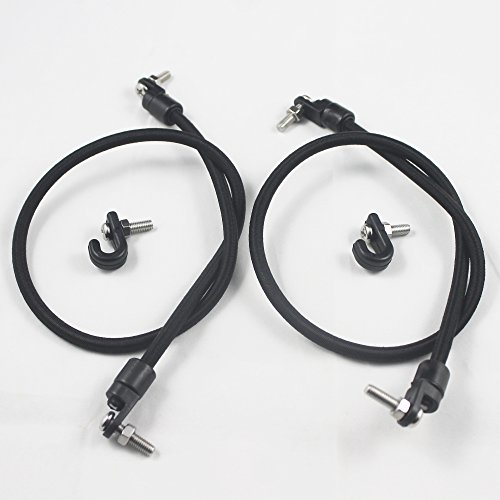
1.You are purchasing 2 Kayak Bungee Paddle Holders.

1. 2 Kayak Bungee Paddle Keepers
Step-by-Step Guide to Setting Your Feather Angle
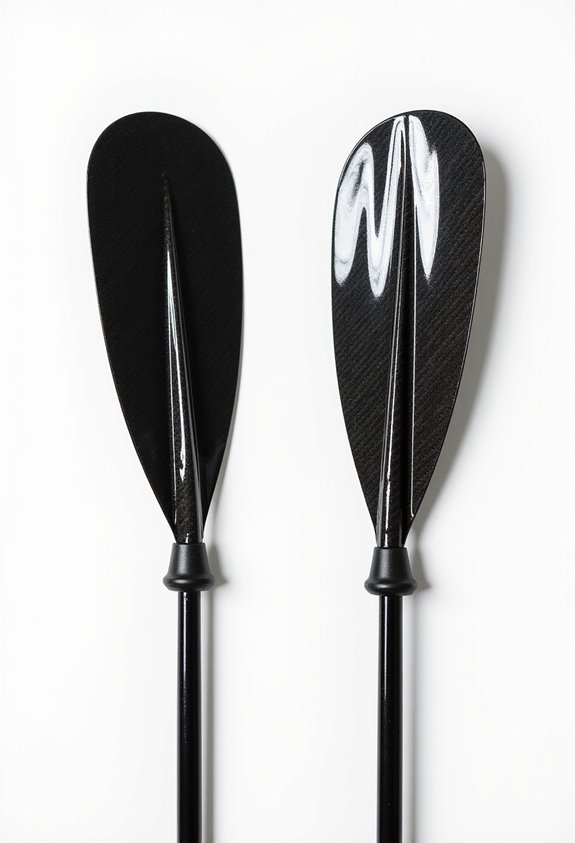
Since proper feather angle setup can make or break your paddling experience, let’s immerse ourselves in the exact steps you’ll need to achieve the perfect alignment!
First, identify your control hand – this determines your paddle design and grip comfort. Right-hand control? Your left blade should tilt forward. Left-hand control? The right blade tilts forward.
Start with these steps:
- Hold your paddle horizontally at chest height
- Set a moderate 30-45° angle initially
- Use temporary pipe clips to test the feel
- Paddle forward to assess wrist position
Ready to make it permanent? Consider using a jointing spigot rather than heat application – it’s much safer for your blade integrity! Additionally, using bamboo paddles is a great choice as they are lightweight and durable, enhancing the overall paddling experience.
Remember to test different angles through various strokes before committing. Your wrists should maintain a neutral position throughout the forward stroke. Happy paddling!
Recommended Products

RUBBER MATERIAL - Heavy duty construction, solid and strong enough.
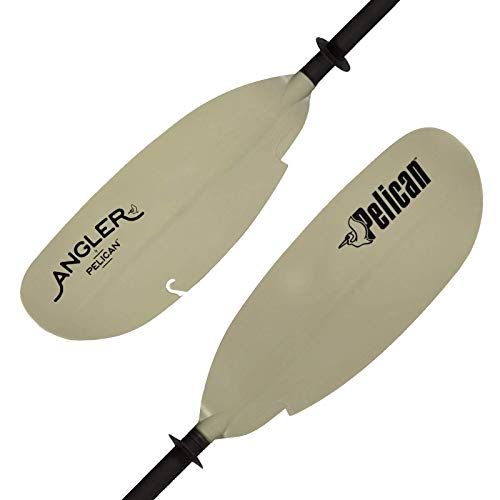
The Poseidon Angler Kayak Paddle is ideal for angler paddlers taller than 5'5". Measuring 98.5” (250cm) long, this paddle is the perfect match for wider fishing kayaks

Durable Snap Button Aluminum Shaft: The two piece aluminum shaft provides long lasting strength and a stable feel for recreational kayaking, with comfortable black grips that help reduce hand fatigue during extended paddling sessions.
Common Mistakes to Avoid When Feathering
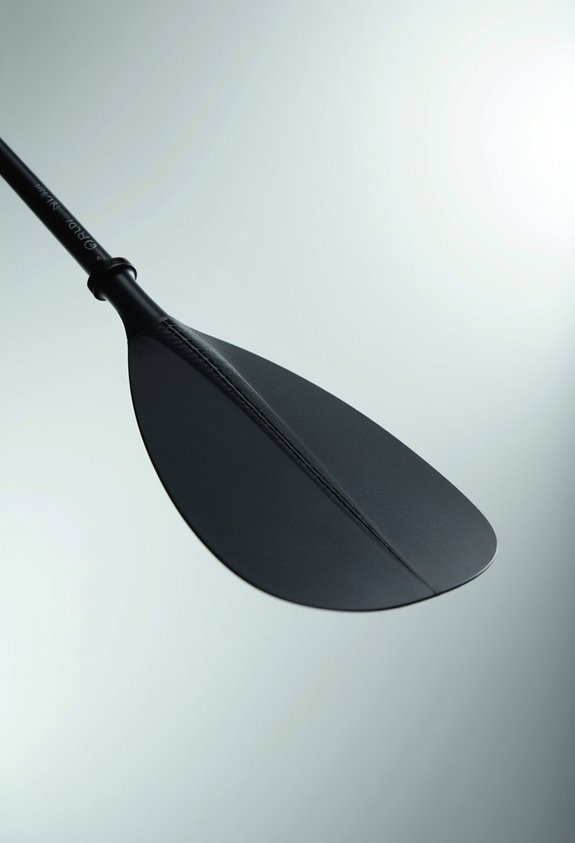
While feathering your paddle blades might seem straightforward, there’s a world of potential pitfalls waiting to throw your paddling rhythm off course!
Let’s bust some common feathering misconceptions. First, more feathering doesn’t automatically mean better performance. Many paddlers crank up their feather angle too high (60-90°), leading to unnecessary wrist strain.
Your paddle grip and stroke style should dictate your feather angle. Low-angle paddling? Keep that feather modest! High-angle strokes? You’ll need a bit more feather for natural wrist positioning.
Watch those wrists! Maintain a neutral position and don’t twist excessively just to achieve the “perfect” blade orientation. Remember – comfort trumps theoretical efficiency every time.
And here’s a surprise: in crosswinds, feathering doesn’t help much at all. Both blades catch wind regardless of angle! Additionally, using a lightweight construction can enhance your paddling experience and reduce fatigue during long sessions.
Mastering the Control Hand Technique
The control hand technique lies at the heart of mastering feathered paddle strokes! Let’s explore how to perfect this essential skill.
Your dominant hand typically serves as your control hand, maintaining a fixed paddle grip and consistent wrist position throughout each stroke. Think of it as your paddle’s anchor!
Here’s what we need to focus on:
- Keep your control hand’s knuckles aligned with the blade’s top edge
- Allow your non-control hand to rotate freely
- Develop muscle memory through consistent practice
Remember, this technique only applies to feathered paddling – there’s no need for a control hand with unfeathered blades! A proper understanding of adjustable angle blades can enhance your paddling efficiency dramatically.
Finding your technique comfort zone is vital. While many paddlers default to right-hand control, we encourage you to experiment. What matters most? Maintaining stroke efficiency while minimizing wrist strain.
Adapting Your Stroke for Different Feather Angles
Mastering different feather angles demands smart adjustments to your paddle technique!
Let’s explore how to optimize your stroke adjustments based on your angle preferences. With lower feather angles (0-30°), we’ll keep our wrists straighter and focus on longer, smoother strokes that minimize fatigue. For higher angles, we’ll adapt to more dynamic muscle engagement through the shoulders and core.
Your comfort levels will guide your technique variations. High-angle strokes work well with greater feather angles, bringing your top hand to shoulder height for maximum power. But remember – control strategies change with each setting!
For efficiency optimization and fatigue management, we’ll match our hand positioning to our chosen angle. Want smoother rotation? Keep that control hand relaxed while maintaining a firm grip, letting the shaft glide naturally through each stroke phase. To enhance your paddling experience, consider durability and material quality for your paddle to withstand varying conditions and ensure long-lasting use.
Weather Conditions and Feathering Adjustments
Understanding how weather impacts your paddle’s feather angle can make or break your kayaking experience! Let’s explore how to adjust your technique for maximum paddle efficiency in different conditions.
When facing strong headwinds, we’ll want to increase our feather angle to 60-90 degrees. This reduces wind resistance and prevents wrist strain – smart paddling is happy paddling!
For those tricky crosswinds, we recommend dropping to a 30-45 degree feather or even going unfeathered. This helps avoid that dangerous blade lift that could send you for an unexpected swim.
Got a tailwind? Lucky you! We suggest minimal feathering to let that wind boost your forward momentum. Installing paddle drip rings can also help keep your hands dry while you focus on your technique.
Remember to keep a weather eye out and adjust your feather angle before conditions catch you off guard. Quick adaptability is key to staying efficient and safe on the water!
Building Muscle Memory for Smooth Rotation
Now that we’ve got those weather adjustments down, let’s build the foundation for flawless feathering technique!
The key to proper muscle engagement lies in consistent, deliberate practice. We’ll start with slow, controlled strokes focusing purely on wrist rotation and hand positioning.
Here’s our proven approach to efficiency improvement:
- Practice on flat water where you can concentrate solely on blade rotation
- Begin with small feather angles (25°) before progressing to larger ones
- Keep your wrists straight to prevent strain
- Record yourself to analyze and refine your technique, which is especially beneficial when considering paddling style preference to ensure you’re maximizing performance.
Advanced Feathering Techniques for Rough Waters
While calm waters let us perfect our basic form, rough conditions demand a whole new level of feathering finesse! Let’s explore how to master those challenging waters.
For rough water success, we’ll want to maintain feather angle adjustments between 30-45 degrees. This sweet spot helps us keep those wrists neutral while maximizing paddle stroke dynamics.
Here’s what we need to focus on:
- Keep feather changes minimal during turbulence – muscle memory is your friend!
- Prioritize control over wind resistance when conditions get choppy
- Maintain consistent hand positioning for quick corrections
Remember, short paddles with wider grips are your best friends in rough waters. When paired with moderate feather angles, they’ll give us that extra stability we need. Additionally, using lightweight paddles (15-31 ounces) can enhance handling and reduce fatigue, making it easier to navigate challenging conditions.
Want a pro tip? In cold conditions, opt for slightly lower angles – your stiff muscles will thank you later!
Recommended Products

CONFORMS TO THE CURVE OF YOUR HAND: This high-quality, patented design cushioned paddle grip makes paddling more enjoyable because it conforms to the curves of your hands. The padding reduces pressure on your palms and tendons, allowing you to get a better grip for more efficient paddling. The soft, durable material also reduces blisters and calluses as you enjoy water activities.

NOTES: NOT for one-piece paddles. Only suitable for paddles with a diameter of 30mm/1.18 inches. Please take a while to measure the diameter of your paddle shaft before order

Easy to Install&Use: Wet the grips and put them on both ends of the paddle, then pushthe grips to the appropriate position. Use soapy water to slide it onto the kayak handles if needed.
Maintaining Your Adjustable Ferrule System
After mastering those rough water techniques, let’s focus on keeping our ferrule system in top shape – because what good is perfect feathering if our paddle won’t adjust properly?
Here’s our fail-proof ferrule cleaning routine: Disassemble after every use, rinse thoroughly with fresh water, and scrub with a soft brush to remove stubborn grit. Don’t forget those hard-to-reach internal splines!
When it comes to lubricating techniques, we swear by dry graphite powder. Just a light dusting will do – we’re not greasing a bike chain here! Skip those oil-based products that’ll turn your ferrule into a dirt magnet.
Store your paddle in two pieces, away from direct sunlight. A clean, dry environment is your ferrule’s best friend. Remember: Regular maintenance keeps those smooth adjustments coming!
Recommended Products

【Product Includes】 you will receive 2 pieces of golf club head hosel brushes, which can help you to clean your golf club; These golf clubs head hosel brushes are abundant to meet your cleaning demands, and you can share them with your family members or friends who love playing golf

Removes dirt and grease from motors, machinery and metal parts.

Comfortable, patented soft-grip handle allows you to scrub various surfaces with minimal hand fatigue
Safety Considerations While Feathering
Since proper feathering technique can make or break your paddling experience, let’s explore the vital safety aspects that’ll keep you injury-free!
One of our key injury prevention strategies is maintaining a neutral wrist position. Keep your control hand grip stable and relaxed, while allowing your other hand to rotate freely on the shaft.
We recommend starting with an unfeathered (0-degree) position if you’re new to paddling. As you progress, gradually increase your feather angle in 5-10 degree increments until you find your sweet spot!
Using ergonomic grip techniques is essential – avoid excessive wrist cocking or twisting. Remember: a relaxed grip is a happy grip!
For maximum safety, regularly assess your technique in different conditions. Are your wrists staying neutral? Is your shoulder rotation smooth? Making these quick checks can prevent long-term injuries.
Troubleshooting Feathering Problems
Now that you’ve got safety down, let’s tackle those pesky feathering problems that can pop up during your paddling adventures! Let’s bust some common feathering myths and focus on proper paddling ergonomics.
First, check your setup. Is your feather angle appropriate for your paddle length? Short paddles work best at 30-45 degrees, while longer ones might need no feathering at all. Who knew?
Watch that wrist position! Keep it neutral and avoid that awkward sideways twist that’s probably causing your fatigue.
Here’s a quick fix checklist:
- Verify your ferrule alignment
- Maintain a fixed control hand
- Let the shaft rotate freely in your other hand
- Use your torso rotation (not just arms!)
- Check for clean blade entry and exit
Recommended Products

【FAMILY FRIENDLY PADDLE】The Adjustable Paddle Family Friendly is the ultimate solution for those looking for a versatile and inclusive watercraft experience. Measuring between 210-230 centimeters (82.5-90.5 inches), this paddle is designed to accommodate people of various heights. Its adjustable feature ensures that everyone in your family can enjoy the water without any limitations. Get yours today and create lasting memories with your loved ones while having fun in the water!

【FAMILY FRIENDLY PADDLE】The Adjustable Paddle Family Friendly is the ultimate solution for those looking for a versatile and inclusive watercraft experience. Measuring between 210-230 centimeters (82.5-90.5 inches), this paddle is designed to accommodate people of various heights. Its adjustable feature ensures that everyone in your family can enjoy the water without any limitations. Get yours today and create lasting memories with your loved ones while having fun in the water!
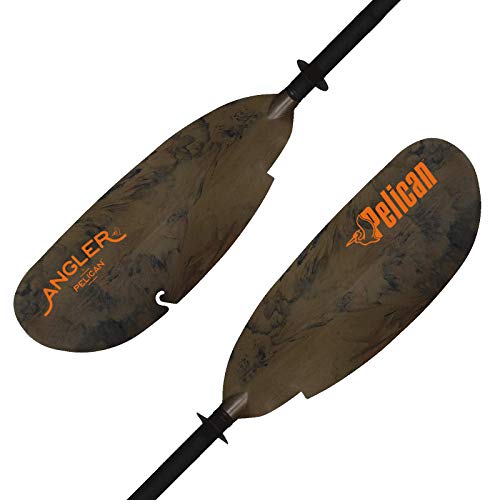
Longer reach:This high-quality paddle is extra long and sized to fit modern fishing kayaks over 34" wide.
Training Exercises for Better Feathering Control
Whether you’re a beginner or experienced paddler, mastering proper feathering control takes dedicated practice and the right training approach!
Let’s start with essential drill variations that build your foundation:
- Practice A-Frame holds for 10 counts to develop stability
- Isolate your bottom hand while placing and extracting the blade
- Combine hip rotation with fluid “rip-through” strokes
- Test different ferrule angles (try 30°, 45°, and 70°)
Timing practice is vital for coordinating your movements. We recommend three sets of 10 repetitions for each exercise, focusing on:
- Neutral wrist positioning before blade engagement
- Smooth shifts from hip to A-Frame position
- Controlled wrist rotations for best blade angles
Remember: maintaining proper form is more important than speed. Ready to transform your feathering technique? Let’s get practicing!
Frequently Asked Questions
Can I Switch Control Hands Mid-Journey Without Changing My Feather Angle?
We don’t recommend it, as keeping the same feather angle while switching hands causes awkward hand positioning and unnatural grip adjustments. It’ll strain your wrists and make your strokes less efficient during paddling.
How Does Paddle Feathering Affect the Stability of My Kayak?
We won’t see direct stability effects from feathering, as it’s mainly about paddle dynamics. However, when we use proper paddle technique with feathering, we’ll experience smoother strokes that can enhance our overall kayaking control.
Should I Use Different Feather Angles for Racing Versus Recreational Paddling?
We’ll typically want higher feather angles (60°) for racing dynamics with powerful strokes, while recreational techniques often work better with lower angles (30-45°) for comfort and easier control during relaxed paddling.
Does Paddle Weight Influence the Optimal Feather Angle for My Technique?
Light as a feather or heavy as lead, your paddle weight definitely affects ideal feather angle. We recommend lower angles (0-30°) for heavier paddles and higher angles (30-45°) for lighter ones to maximize paddle performance.
Can Feathering Help Reduce Shoulder Pain During Extended Paddling Sessions?
We recommend choosing a lower feather angle or zero feather for better shoulder relaxation. It’ll reduce rotational stress and support pain prevention during long paddles by keeping your wrists and shoulders in a more natural position.


