As an Amazon Associate, we earn from qualifying purchases. Some links on this site are affiliate links at no extra cost to you. Our recommendations are based on thorough research and editorial judgment.


How To Choose Your First SUP Board Size And Shape?

For your first SUP board, we’ll help you find that sweet spot between stability and performance! Start with a medium-length board (10-11 feet) that’s at least 32 inches wide – this gives you the perfect balance of maneuverability and confidence. Multiply your body weight by 1.4 to determine ideal board volume in liters, and don’t forget to factor in any extra gear. While wider boards might move slower, they’ll help you master the basics before advancing to sleeker designs. Let’s explore how to fine-tune your perfect match!
Key Takeaways
- Calculate your ideal board volume by multiplying your body weight by 1.1-1.4, including any additional gear weight.
- Choose a wider board (32-36 inches) for better stability as a beginner and enhanced confidence during learning.
- Select a medium-length board (9-12 feet) for versatility and balanced performance suitable for most beginner activities.
- Consider a planing hull with a rounded nose for stability if focusing on recreational paddling, yoga, or casual use.
- Pick a board thickness of 5 inches for paddlers under 225 lbs, or 6 inches for those over 225 lbs.
Understanding SUP Board Length Benefits
When you’re diving into the world of stand-up paddleboarding, understanding board length is your first essential step! Let’s explore the key length advantages that will help guide your board selection.
Think of SUP lengths like this:
- Short boards (under 10′): Super maneuverable, perfect for surfing and tight turns
- Medium boards (9-12′): The versatile all-rounders that work for most beginners
- Long boards (12-14′): Speed demons built for racing and touring
Each length brings specific benefits to your paddling experience. Longer boards glide smoothly and track straighter, while shorter ones turn on a dime. Medium-length boards offer that sweet spot of stability and control that we love recommending to newcomers. Additionally, many paddle boards today come with high weight capacities that make them suitable for multiple riders or extra gear.
Want to carry gear or paddle with a friend? Longer boards provide that extra volume you’ll need!
The Impact of Width on Your Paddling Experience
Now that you’ve got board length down, let’s talk about another game-changing factor – width!
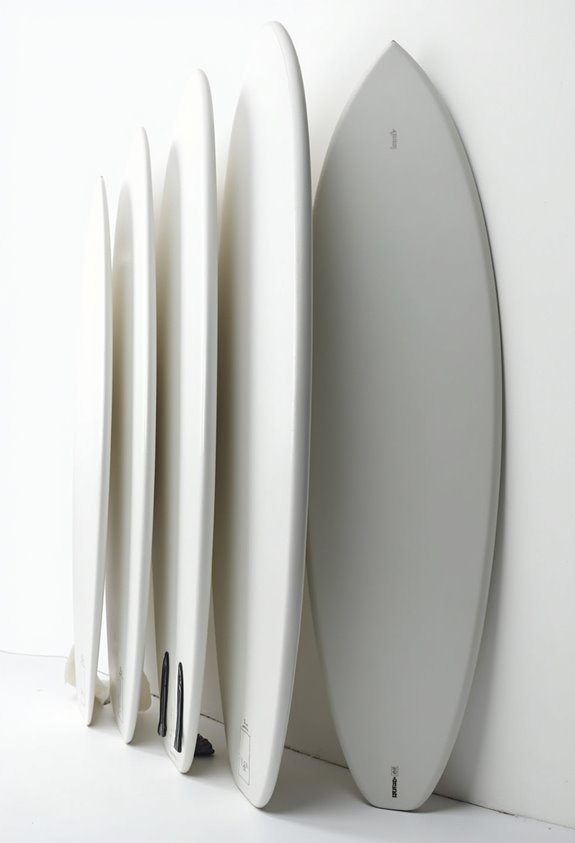
When choosing your first SUP board, wider boards (32-36 inches) offer superior stability features that’ll boost your confidence on the water. They’re perfect for recreational use and activities like yoga or fishing, though you’ll experience some speed trade-offs. Additionally, wider boards often have a higher weight capacity supporting larger gear and multiple users, making them ideal for fishing trips.
Narrower boards shine in speed and drag reduction, but they demand more advanced balance skills. For most beginners, we recommend starting wider – you can always progress to a slimmer board as your technique improves!
Consider your paddling styles carefully. If you’re just getting started or plan to cruise leisurely, prioritize stability with a wider board. But if you’re dreaming of racing or advanced techniques, you might want to sacrifice some stability for better maneuverability factors.
Essential Thickness Guidelines for Different Riders
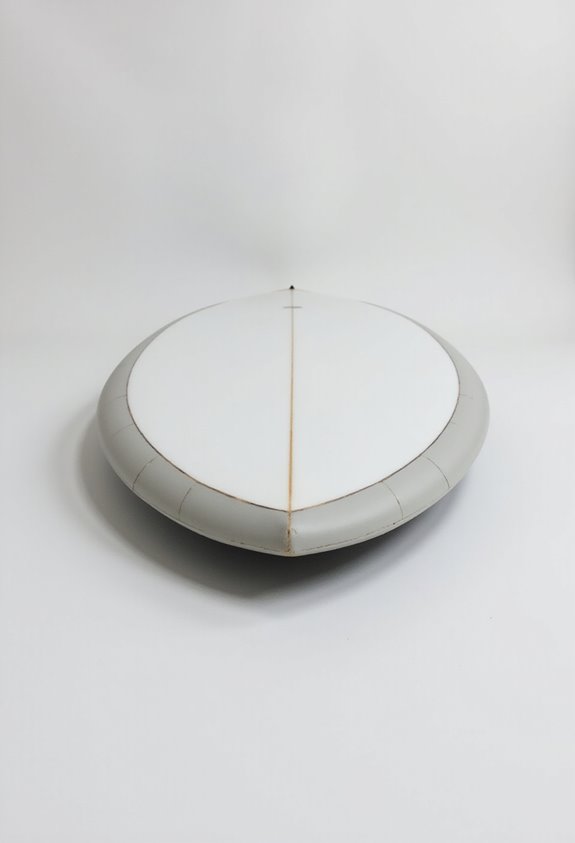
The right board thickness can make or break your SUP experience! For most paddlers, we recommend starting with a 5-inch thick board that offers an excellent balance of stability and manageability.
Your thickness preferences should align with your weight and rider experience. Here’s what we suggest:
- Under 225 lbs: Stick with 5 inches for superior performance
- Over 225 lbs: Consider 6 inches for extra buoyancy
- Beginners: Thicker boards (5-6 inches) provide more stability
- Advanced riders: You might prefer thinner boards for better maneuverability
Remember that modern technology has revolutionized board construction! Many quality brands now achieve excellent stiffness at lower thicknesses, so don’t assume thicker always means better. Choosing a board made from eco-friendly materials can also enhance your paddling experience.
Want the best experience? Match your board’s thickness to your intended use and skill level – you’ll thank us later!
Matching Your Weight to the Perfect Board Volume
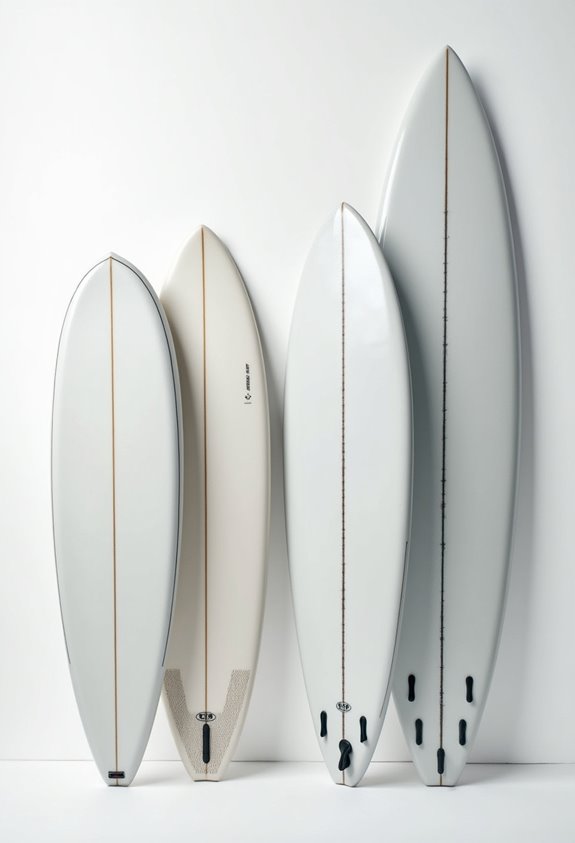
Board thickness sets the stage, but volume is what’ll keep you floating! Let’s make sure you get the perfect amount of buoyancy for your paddling adventures.
For beginners, we’ll multiply your body weight by 1.1-1.4 to find your ideal beginner volume. Why the range? Because everyone’s different! A weight adjustment factor of 1.4 gives you maximum stability when you’re starting out.
Here’s a quick volume guide:
- Under 200 lbs: Standard SUP volumes work well
- 200-235 lbs: Look for 175L+
- 235-300 lbs: Aim for 181L+
- Over 300 lbs: You’ll need 230L+
Don’t forget to factor in any extra weight from gear or passengers! And remember – while exceeding weight capacity won’t sink your board, it’ll definitely make your paddling experience less enjoyable. Durable materials like eco-friendly rubber and hard plastic in your gear can enhance its longevity, ensuring a better experience on the water.
Exploring Different Board Shapes for Various Activities
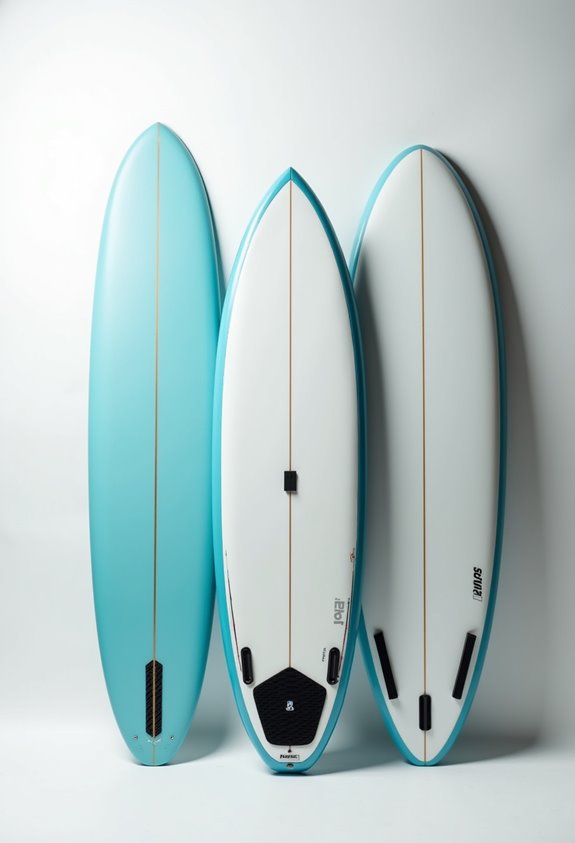
Selecting your perfect SUP shape doesn’t have to feel like solving a puzzle!
When it comes to board designs, we’ve got two main contenders to evaluate. Planing hulls, which are flat and wide like surfboards, excel at activities requiring stability and quick turns. They’re perfect for yoga, leisure paddling, and catching waves!
Looking for speed and efficiency? Displacement hulls, with their pointed noses, are your best friends for touring and racing.
The activity suitability of each shape is crystal clear:
- Rounded noses = Maximum stability for beginners
- Pointed noses with square tails = Speed demons for distance
- Wide, flat designs = Yoga and casual cruising
- Hybrid shapes = Best of both worlds
Keep in mind that the included accessory evaluation can enhance your overall experience on the water!
Remember: Your intended activity should guide your choice – not the other way around!
Key Features of All-Around SUP Boards
Now that you’ve got a handle on different board shapes, let’s talk about what makes all-around SUP boards so amazing! These versatile boards are perfect for beginners and experienced paddlers alike.
What makes them so special? First, they’re built with durability in mind, using materials like triple-layer PVC and carbon fiber rails that can take a beating! Whether you’re using carbon or aluminum paddle types, these boards can handle it all.
The wide, stable design helps you feel confident on the water, while smart features like deck traction pads keep you steady. Most all-around boards include removable fins, allowing you to customize your setup for different conditions.
Best of all, they’re incredibly convenient with built-in carrying handles and high weight capacities – perfect for bringing along a cooler or even your furry friend! Additionally, many boards feature non-slip EVA deck pads, ensuring added safety and stability while paddling.
Recommended Products

Premium All Around Performance SUP for Elevated Water Experiences: Designed for discerning paddlers, the HD Aero delivers refined stability, smooth glide, and versatile performance for fishing, touring, fitness, and leisure on any water setting

Ulta-Premium Inflatable Stand Up Paddle Board. This is a complete package that includes the highest quality everything!

Elite SUP + Kayak Hybrid for Maximum Versatility: The LowRider 11'6" paddle board is a high-performance SUP + kayak hybrid designed for paddlers who want it all. Stand, sit, or tandem paddle with confidence—perfect for solo adventures or team missions on the water.
Selecting the Right Paddle Length
When it comes to paddle boarding success, getting the right paddle length can make or break your experience! Let’s make sure you start with the perfect fit.
The simplest way to measure? Stand tall and reach up – your paddle’s grip should hit right at your wrist bend. For most beginners, we recommend adding 8-12 inches to your height as a starting point.
We always suggest going with adjustable paddles for your first purchase! Not only can you experiment with different lengths, but you’ll also be able to share with friends and family. Plus, many adjustable paddles break down for easy transport, regardless of paddle material.
Remember: shorter paddles work best for surfing and maneuverability, while longer ones excel at touring and racing. Additionally, selecting a paddle length based on your height is crucial for optimal performance, particularly for beginners. Don’t be afraid to fine-tune your length as you develop your paddling style!
Recommended Products

✔ Ultra-Plush Comfort – Crafted from premium Top-Grain Nappa 11000 leather with Comfort-Matrix Technology (memory foam, cool gel, springs & support foam) for superior ergonomic support and cooling.

The Seatcraft experience is where craftsmanship meets functionality. Engineered for unparalleled quality and ergonomic comfort. Sit with us and experience the decades of mastery and passion we’ve put into our seats. Don’t settle for less.

Italian Nappa leather upholsters all seating and armrests. This premium top-grain leather is celebrated for its elegant feel, sophisticated appearance, and durable character, designed to suit an active household.
Stability Tips for First-Time Paddlers
Standing tall and stable on your SUP board might feel tricky at first, but we’ve got all the essential tips to help you find your balance!
Let’s start with proper stance – position your feet shoulder-width apart over the center handle. Keep those knees slightly bent and loose to absorb movement. Remember: your paddle is your friend! Use it as a stabilizer by keeping it close to the board during strokes.
Want to know our favorite balance techniques? Keep your eyes on the horizon (not your feet!) and engage those core muscles. Start in calm, shallow water while you’re learning the ropes. Choosing a board with extra-wide designs enhances stability, making it easier for beginners to balance.
For the best paddle positioning, think “third leg” – plant it firmly in the water when you need extra stability. And don’t forget to maintain fluid, even strokes on both sides of your board!
Storage and Transportation Considerations
Three key factors make or break your SUP board’s longevity: how you store it, transport it, and protect it from the elements!
Let’s talk storage solutions first. Keep your board in a cool, dry space away from direct sunlight – think garage or shed. For inflatable SUPs, deflate to 3-5 PSI if you’re storing in warm areas, and always roll (don’t fold!) to prevent damage. Additionally, consider using high-quality padding on your SUP board rack to safeguard against scratches during storage.
When it comes to transport methods, you’ve got options! Roof racks are perfect for hard boards, while inflatable SUPs can pack into a convenient backpack. No roof rack? No problem! Soft racks or foam blocks work great as budget-friendly alternatives.
Here’s a pro tip: Invest in a quality travel bag – it’s like a cozy sleeping bag for your SUP that protects it during both transport and storage!
Weather and Water Conditions Effects on Board Choice
Now that you’ve got storage figured out, let’s get you matched with the perfect board for your local conditions!
Weather impact and water conditions play a huge role in determining your ideal SUP board. Let’s break it down:
For calm days on flat water, you’ll want a wider, more stable board (32″ or more). These are perfect for beginners finding their balance!
When winds kick up or waters get choppy, longer and narrower boards help you cut through the conditions. Think 11’6″ to 14′ for those breezy adventures.
Here’s a quick rule of thumb:
- Calm lakes = wider, stable boards
- Ocean surf = shorter, maneuverable designs
- Rough water = higher volume for stability
- Strong currents = longer boards for tracking
Additionally, consider durability and stability to ensure your board can handle unpredictable ocean conditions. Remember: your local weather patterns should guide your choice. What’s the typical forecast at your favorite paddling spot?
Must-Have Safety Equipment for Beginners
Safety isn’t just a buzzword when it comes to SUP boarding – it’s your ticket to countless worry-free adventures on the water!
Let’s start with the absolute essentials. Your board needs a proper leash – think ankle or calf for calm waters, and quick-release waist belts for rivers. And don’t even think about paddling without a PFD that fits just right!
Communication tools are your lifeline when things don’t go as planned. A waterproof phone and whistle could make all the difference in an emergency.
What about Mother Nature’s challenges? Pack sun protection (yes, the water reflects those rays!), and layer up with quick-dry clothing for unexpected weather shifts.
Finally, don’t forget your basic first aid kit and repair tools. Because the best paddlers are always prepared paddlers!
Recommended Products

FUN ON THE WATER: The YAKport Kayak Launch makes water activities accessible to all ages and experience levels; Spend more time on the water by easily launching your kayak, canoe, or stand-up paddle board

RUGGED, RIGID ALL DROP SITICH CONSTRUCTION - Provides the rigid feel and the paddling speed of a traditional rigid kayak, yet packs in the smallest car trunk or in the corner of a closet. The 473 RazorLite can be paddled up to 5 mph.

Windsurfing Board and Sail Starter Board: If you have a dream of traveling around the world, or want to start a new skill, or want to find a new way to relieve stress and relax, and experience the adrenaline surge in your veins brought by sailing, choose the combination set of Spatium Inflatable Windsurfing Board and Sail, which is both convenient to carry and cost-effective.
Frequently Asked Questions
How Long Does an Inflatable SUP Board Typically Last With Regular Use?
We’ve found that inflatable board longevity typically spans 3-5 years with regular use. To maximize your board’s life, we recommend following regular maintenance tips like proper storage, consistent cleaning, and maintaining correct inflation pressure.
Can I Use My SUP Board in Chlorinated Swimming Pools?
We don’t recommend using SUP boards in chlorinated pools. It’s not just about pool safety guidelines – chlorine can damage your board’s materials. For better SUP maintenance, stick to lakes, rivers, or oceans instead.
What’s the Minimum Water Depth Needed for Safe SUP Boarding?
We recommend a minimum water depth of at least 1 foot (30 cm) for safe SUP boarding. When it’s shallower, we suggest kneeling instead of standing to protect yourself and your board from potential damage.
How Often Should I Replace My SUP Board’s Fin System?
We don’t need to replace fin systems regularly unless they’re damaged. With proper fin system maintenance, both removable and fixed fin types can last years. Just inspect annually and replace if you notice cracks or looseness.
Can Multiple People Stand on One SUP Board at the Same Time?
While we wouldn’t recommend hosting a dance party, yes! We can share SUP board capacity with friends. Most multi-person paddling boards support 200-500 pounds, so grab a buddy and enjoy – just check those limits first!


