As an Amazon Associate, we earn from qualifying purchases. Some links on this site are affiliate links at no extra cost to you. Our recommendations are based on thorough research and editorial judgment.


What Type Of Life Vest Is Required By Coast Guard?

The Coast Guard requires different PFD types based on your boat’s size and activities. For vessels under 16 feet, you’ll need USCG-approved wearable PFDs for each person. Boats 16 feet or longer must also carry a throwable Type IV device. Children under 13 must wear life jackets while underway – no exceptions! The specific classification (Level 50-150) depends on your water conditions and planned activities. Let’s explore which safety features match your boating needs.
Key Takeaways
- USCG requires Type I, II, III, or V life vests that are properly sized and Coast Guard-approved for each person aboard.
- Boats under 16 feet need wearable PFDs for each person, while boats 16+ feet require additional throwable devices.
- Children under 13 must wear USCG-approved life jackets while vessel is in motion, with specific weight-appropriate sizing.
- Level classifications range from 50 to 150, with higher numbers offering more protection for offshore and rough conditions.
- Life vests must have visible Coast Guard approval labels, reflective materials, and proper safety features like head support.
Understanding Coast Guard PFD Classifications
When it comes to keeping safe on the water, understanding the Coast Guard’s PFD classification system is absolutely essential! Today’s PFD technology has evolved beyond the old Type I-V system to focus on performance levels that better reflect modern floatation materials and uses.
Let’s break down the key performance levels:
- Level 50: Perfect for skilled swimmers needing mobility
- Level 70: Great for recreational boating on calm waters
- Level 100: Added protection with some self-righting ability
- Level 150: Maximum safety for offshore adventures!
Each level serves a specific purpose, and we’ll help you choose the right one. Remember: the Coast Guard requires approved PFDs to display proper labels showing performance level, size, and intended use. Getting this wrong isn’t just illegal – it could be dangerous! Choosing the right US Coast Guard approved life vest ensures compliance with safety standards.
Recommended Products

US Coast Guard-Approved: For optimum water safety

USCG APPROVED INFANT LIFE JACKET: Coast Guard approved baby life jacket for infants and toddlers under 30 lbs. Designed for boating, pool, beach, lake and supervised family water activities.
Basic Requirements for Different Boat Sizes

Since safety requirements vary greatly based on your boat’s size, let’s explore the essential PFD rules you’ll need to follow!
For boats under 16 feet, you’ll need a wearable USCG-approved PFD for each person aboard – but no throwable device is required. Simple enough, right?
The rules change once your boat hits 16 feet or longer. Now you’ll need that throwable Type IV flotation device too! Don’t forget, it’s in addition to the wearable PFDs for everyone on board.
Here’s something that applies to ALL boat sizes: children under 13 must wear their life jackets when the vessel’s underway. No exceptions! And everyone’s PFD must be properly sized – we don’t want adult-sized vests on kids or vice versa.
Remember: properly fitted PFDs save lives! Additionally, ensure each PFD is USCG-approved to guarantee optimal safety and compliance with regulations.
Recommended Products
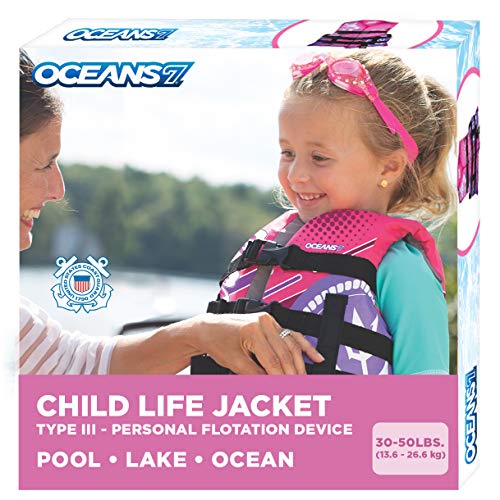
US Coast Guard-approved: Personal flotation device (PFD) passes highest USCG standards and testing; life jackets are labeled for infant, child or youth by weight range
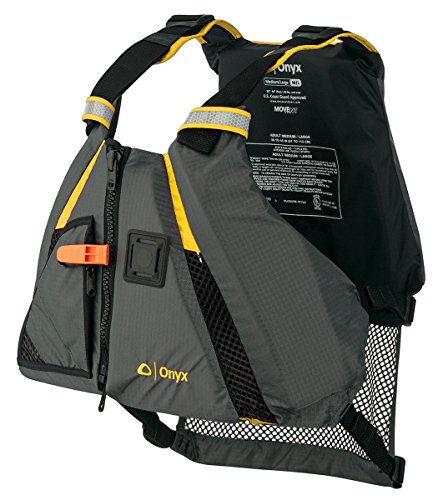
MAXIMUM SAFETY: Dual U.S. Coast Guard and Transport Canada Approved, ensuring the highest standards of water safety
Essential Safety Features in Approved Life Vests

Now that you know the basic requirements for your boat size, let’s explore what makes a life vest truly safe and effective!
When it comes to critical features, Coast Guard-approved life vests must include several key safety enhancements:
- Head support collars that keep unconscious wearers face-up
- Bright colors and reflective strips for maximum visibility
- Sturdy grab handles for quick rescue operations
- Secure crotch straps to prevent the vest from riding up
We can’t stress enough how these features work together to save lives! The right combination guarantees you’ll stay afloat and visible until help arrives. Additionally, the right PFDs are equipped with buoyancy ratings according to their inflation mechanisms to ensure effectiveness in various situations.
For high-impact activities like water skiing, look for vests with three encircling belts or two belts plus an alternate closure system. And remember – inflatable PFDs aren’t recommended for kids under 16. Safety first, fun second!
Recommended Products

US Coast Guard-approved: Personal flotation device (PFD) passes highest USCG standards and testing; life jackets are labeled for infant, child or youth by weight range

US Coast Guard-approved adult life jacket

EMERGENCY FLOTATION PROTECTION – Designed to provide dependable buoyancy during unexpected on-water emergencies.
Age-Specific Life Vest Regulations

Every child under 13 must wear a properly-fitted life vest while on moving vessels – it’s not just smart safety, it’s federal law!
When it comes to child safety on boats, we don’t mess around. There are only two exceptions to this rule: when children are in enclosed cabins or below deck.
Here’s what you need to know about life vest regulations for kids:
- The vest must match their weight and activity type
- Inflatable vests aren’t recommended for anyone under 16
- Type II vests work well for calm waters
- Type III vests offer comfort for most conditions
Want to make your next family boat trip both safe and enjoyable? Choose the right vest! Type II life vests are perfect for most kids since they’re designed to turn unconscious wearers face-up in the water – a vital safety feature that gives parents peace of mind. Additionally, all recommended vests comply with US Coast Guard flotation standards, ensuring the utmost safety for your little ones while enjoying water activities.
Recommended Products

SAFE and SECURE – US Coast Guard Approved closed sided Life Jacket for a comfortable yet secure fit
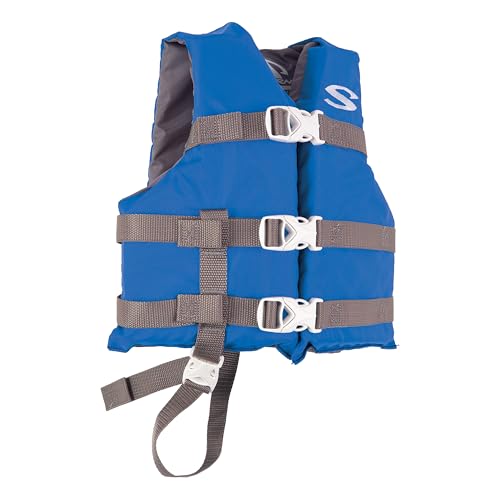
US Coast Guard Approved: A child life vest ensuring total water safety

US Coast Guard Approved: This personal flotation device meets USCG requirements. Less bulky design for use when quick response is likely and offers a larger range of motion
Performance-Based Rating System
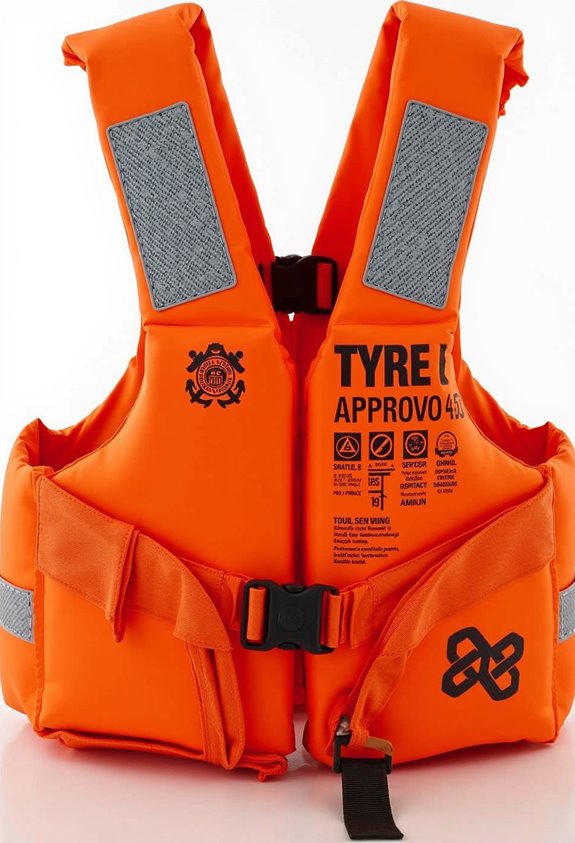
While the old Type I-V system served us well, we’re excited to tell you about the Coast Guard’s new performance-based rating system that’s changing the game!
Starting January 6, 2026, life jackets will be classified by performance levels (50, 70, 100, 150, and 275) instead of types. Each level indicates specific buoyancy ratings and rescue expectations – how cool is that?
Here’s what the numbers mean:
- Level 50: Perfect for skilled swimmers in calm waters (11.2 lbs buoyancy)
- Level 70: Great for nearshore fun (15.7 lbs buoyancy)
- Level 100: Rough water ready with self-righting features
- Level 150: Offshore-worthy protection
- Level 275: Ultimate protection for extreme conditions
The best part? These ratings align with international standards, making it easier than ever to choose the right life jacket for your adventure! Additionally, choosing life vests with adequate buoyancy ratings is crucial for ensuring safety during your water activities.
Recommended Products

Neolite Kwik Dry USCG Approved Life Jacket, Fits Chest 40 - 42.5 inch

OPTIMIZED FIT– The U.S. Coast Guard recommends a very snug fit to ensure safety on the water. Easy to layer over clothing, rash guards, swimwear, or wetsuits, with Coast Guard-approved size range for 50 to 90 pounds

USCG Approved: Approved by the United States Coast Guard for use
Maintenance and Inspection Guidelines
Proper maintenance of your life jacket isn’t just about following rules – it’s about protecting your life when you need it most! Let’s review the essential maintenance schedules and inspection checklists you’ll need to follow.
Weekly checks are vital! We need to:
- Visually inspect all survival craft and rescue boats
- Run rescue boat engines for 3 minutes in both directions
- Confirm batteries are fully charged
For your inflatable life jackets, check before every voyage:
- Look for wear, tears, and seam integrity
- Verify green service indicators
- Examine CO2 cylinders for corrosion
- Test auto-inflation components
Monthly inspections require a deeper dive – we’ll need to verify completeness of all lifesaving equipment and check for any missing components or defects. Remember: a well-maintained life jacket is your best friend on the water! Additionally, utilizing proper storage solutions can significantly enhance the longevity of your life jackets by keeping them dry and organized.
Frequently Asked Questions
Can I Use My European-Certified Life Vest in U.S. Waters?
We’re seeing 100% more compatibility between European standards and US regulations today. You can use your European life vest if it meets UL 12402 series requirements and displays proper USCG certification on its label.
What Happens if My Life Vest’s USCG Approval Label Becomes Unreadable?
We’ll need to replace your life vest if its USCG label becomes unreadable. For proper life vest maintenance, it’s essential to keep labels legible – without readable approval markings, the vest won’t meet legal readability standards.
Are Rental Boats Required to Provide Life Vests for Passengers?
Yes – and it’s worth noting that 100% of rental boats must follow strict rental regulations. We’re required to have Coast Guard-approved life vest types (I, II, III, or V) for every passenger, readily accessible and in good condition.
Can Inflatable Life Vests Be Used for Commercial Fishing Operations?
Yes, we can use inflatable life vests in commercial fishing if they meet commercial standards and regulations. They’ll need proper maintenance, and while single-chamber designs are now allowed, they must meet strict performance requirements.
How Do Coast Guard Requirements Differ for Sailboats Versus Motorized Vessels?
Like two sides of the same safety coin, we’ll find sailboat regulations and motorized vessel differences share most requirements, but motorized boats face stricter wear rules for small vessels, PWCs, and towed activities.


